
Radiesse Structural vs. Hyperdilute: Which One Is Right for You?
If you’ve been researching ways to restore facial definition or improve skin laxity without surgery, chances are you’ve come across Radiesse.
But here’s where it can get confusing: Radiesse can be used in different ways depending on what you’re trying to achieve.
At MOLD Manila in Quezon City, we offer Radiesse Structural and Radiesse Hyperdilute. Both use the same calcium hydroxylapatite (CaHA) injectable, but they serve different purposes.
The simplest distinction? Structural Radiesse is used when you want lift, support, and definition. Hyperdilute Radiesse is used when you want to improve skin firmness, elasticity, and overall skin quality.
Understanding that difference is the first step in figuring out which treatment may be right for you.
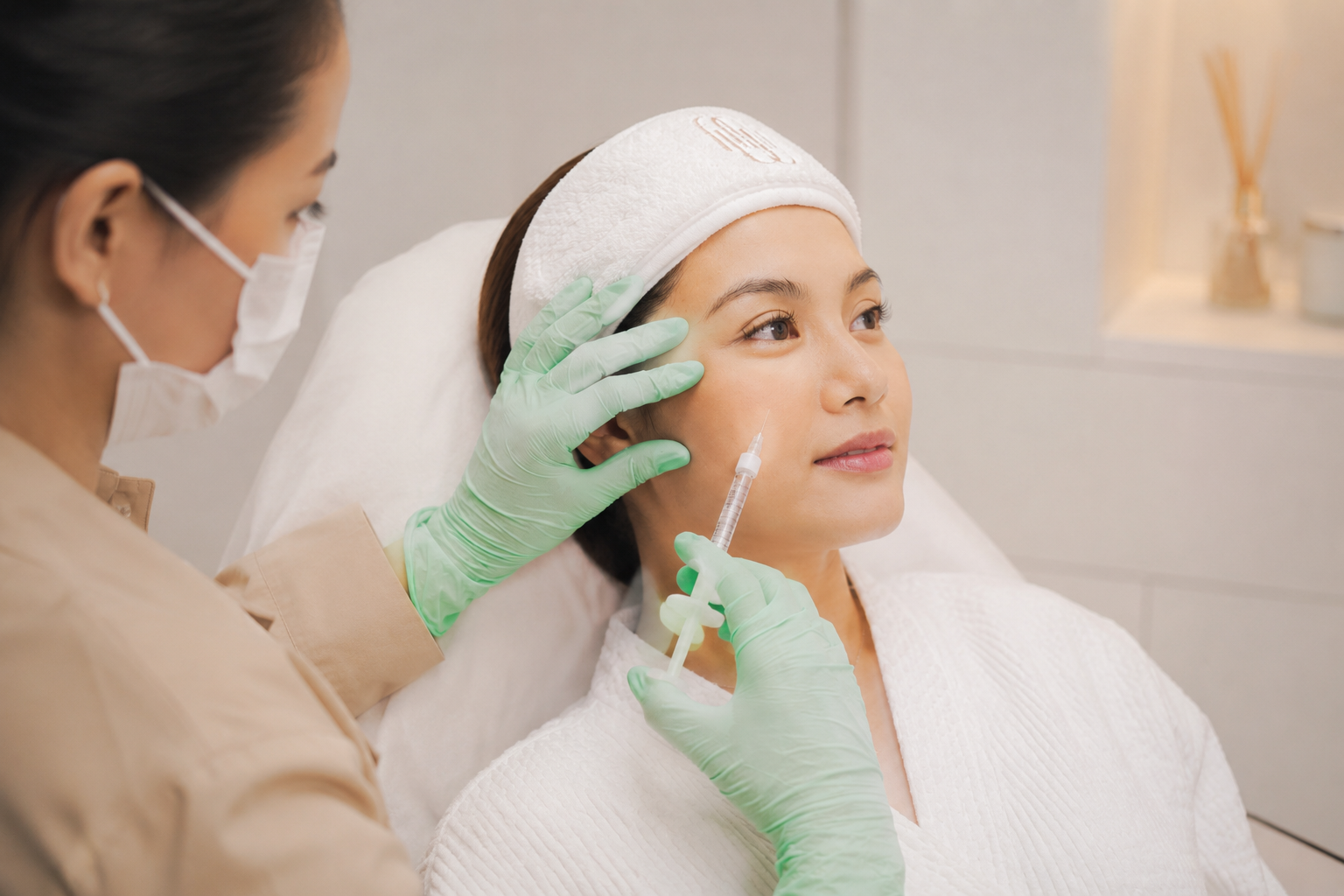
This means the treatment can address two different components of facial aging: changes in facial structure and changes in skin quality.
How Radiesse is prepared and placed determines which of those effects becomes the priority.
Used at or near its original concentration, it provides greater structural support. When sufficiently diluted, its volumizing effect is reduced and the CaHA can be distributed across a broader area to encourage skin remodeling.
That’s the difference between Radiesse Structural and Radiesse Hyperdilute.
If your concern is that your jawline has become less defined, your chin lacks projection, or your cheeks have lost some of their structural support, Radiesse Structural may be the more appropriate approach.
The product is used at a concentration that preserves its lifting and contouring properties and is strategically placed in areas where additional structural support is needed.
Think of it as reinforcing the architecture of the face rather than simply adding volume.
Depending on your anatomy and aesthetic goals, Structural Radiesse may be used for areas such as the cheeks, midface, jawline, and chin.
For someone considering non-surgical jawline contouring, for example, the goal isn’t necessarily to make the lower face bigger. Strategic placement can help create clearer transitions and improve the appearance of facial angles.
Similarly, treatment in the cheek or midface can help restore support where age-related changes have softened previously defined contours.
Because Radiesse contains CaHA, the treatment also has a biostimulatory component. You receive an immediate structural effect from the injectable while collagen-related remodeling develops over time.
Radiesse Structural at MOLD Manila starts at ₱35,000 for 1.5 cc.
The amount of product required depends on your anatomy and treatment goals, so the appropriate volume is determined during consultation.
Not every sign of facial aging needs more volume.
Sometimes your facial structure is still where you want it, but the skin itself has become thinner, looser, or more crepey. This is where Radiesse Hyperdilute serves a very different purpose.
Hyperdilute Radiesse uses the same CaHA product but dilutes it so that it can be distributed more broadly throughout the treatment area.
Instead of creating projection or structure in one specific location, the goal is biostimulation across a larger area of tissue.
This makes Hyperdilute Radiesse particularly relevant when the concern is skin laxity, declining firmness, elasticity, or crepey texture rather than facial volume.
It may be used as part of a treatment plan for the face, neck, décolletage, hands, and selected areas of the body, depending on clinical assessment.
The easiest way to picture it is this: Structural Radiesse builds support in specific areas, while Hyperdilute Radiesse creates a broader collagen-stimulating effect underneath the skin.
Because the objective isn’t significant volume replacement, the changes from Hyperdilute Radiesse tend to develop progressively. As collagen and elastin remodeling occurs, patients may notice improvements in firmness, texture, and overall skin quality.
Radiesse Hyperdilute at MOLD Manila is ₱60,000 for 4.5 cc.
The appropriate dilution, treatment volume, and number of sessions depend on the area being treated and the condition of your skin.
Shape vs. Skin Quality: The Difference That Matters
Choosing between Structural and Hyperdilute Radiesse becomes much easier when you stop thinking about them as two versions of the same filler.
They’re two approaches designed around different concerns.
So if you’re researching Radiesse for jawline contouring, Structural Radiesse is generally the more relevant approach because the objective is support and definition.
If you’re researching Radiesse for loose skin or skin tightening, Hyperdilute Radiesse may be more appropriate because the focus shifts away from adding shape and toward improving the quality of the skin itself.
But facial aging rarely fits neatly into one category.
When Structural and Hyperdilute Radiesse Work Together
You don’t necessarily have to choose one or the other.
Some patients have both structural changes and changes in skin quality. A jawline, for example, can look softer because underlying support has changed while the overlying skin has also become less firm.
In cases like these, Structural and Hyperdilute Radiesse may complement each other as part of the same overall treatment strategy.
Structural Radiesse could be used to address areas requiring contour or support, while Hyperdilute Radiesse could be used where improving skin quality is the priority.
This is also why choosing a treatment based solely on before-and-after photos can be misleading. Two people who both describe their concern as a “sagging jawline” may actually require completely different approaches.
One may need structural support. Another may primarily have skin laxity. A third may have a combination of both.
The treatment should follow the anatomy—not the other way around.
Radiesse isn’t permanent, and longevity varies between patients. Treatment area, product amount, injection technique, metabolism, skin quality, age, and lifestyle can all influence how long results remain noticeable.
Rather than promising an exact number of months for every patient, your clinician can give you a more realistic expectation based on your individual treatment plan.
What About Downtime?
Radiesse is a minimally invasive injectable treatment, so recovery is considerably different from undergoing facial surgery.
Temporary injection-site reactions such as swelling, tenderness, redness, or bruising can occur after treatment.
The extent of downtime varies depending on the areas treated, the amount of product used, and individual response. Your clinician will provide specific aftercare instructions based on your procedure.
So, Which Radiesse Treatment Is Right for You?
Start with what you actually want to change.
If you look in the mirror and think, “I want my jawline, chin, or cheeks to look more defined,” the conversation is likely to begin with Structural Radiesse.
If your concern is, “My skin doesn’t feel as firm or elastic as it used to,” Hyperdilute Radiesse may be the more relevant option.
And if you’re noticing both, your treatment plan may involve addressing structure and skin quality separately.
The goal isn’t to decide how many syringes of filler you need before walking into the clinic. It’s to understand why an area looks different and choose the treatment that addresses the underlying concern.
Radiesse at MOLD Manila in Quezon City
If you’re considering Radiesse in Manila or Quezon City, your treatment at MOLD Manila begins with an assessment of your facial anatomy, skin quality, degree of laxity, and aesthetic goals.
From there, your clinician can determine whether Radiesse Structural, Radiesse Hyperdilute, a combination of both, or another treatment entirely makes the most sense for you.
Because good injectable work isn’t simply about adding more volume.
Sometimes the face needs structure. Sometimes the skin needs stimulation. Sometimes it needs both.
Begin With a Consultation
Schedule a consultation at MOLD Manila to find out which Radiesse approach is best suited to your facial structure, skin quality, and aesthetic goals.