
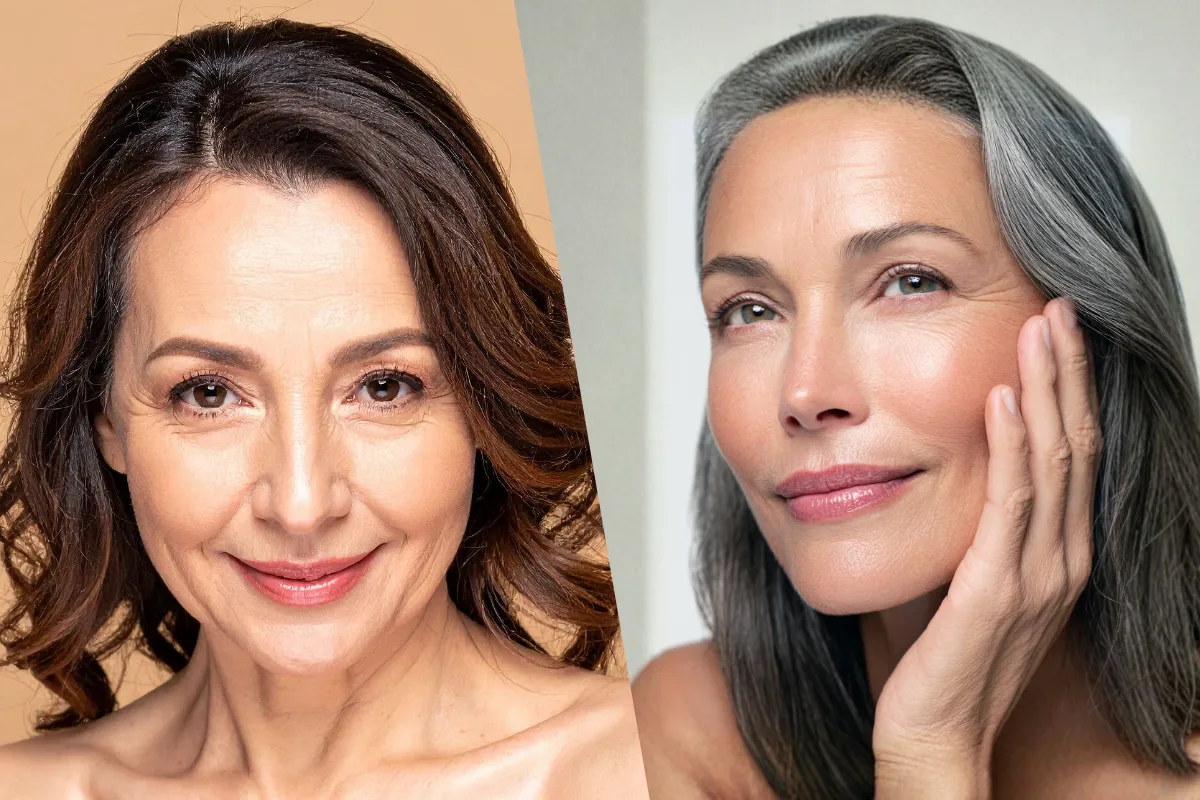
Perimenopause and Menopause Skincare: What Your Skin Is Telling You—and How to Care for It Properly
Hormonal changes don’t just affect how you feel—they show up on your skin, often before you fully realize what’s happening in your body.
For many women, perimenopause and menopause mark a turning point in their skin journey. Texture changes. Breakouts return unexpectedly. Skin feels drier, thinner, more reactive—and suddenly, the routines and products that worked for years stop delivering results.
At MOLD Manila, we approach menopausal skin not as a “problem to fix,” but as a biological transition that requires smarter, more respectful care—grounded in science, barrier support, and realistic expectations.
Understanding Perimenopause vs. Menopause (And Why Skin Changes Early)
Many women are surprised to learn that skin changes can begin years before menopause officially starts.
Perimenopause is the transitional phase leading up to menopause. It can begin in your mid-to-late 30s or early 40s and last several years.
Menopause is officially defined as one full year after your last menstrual cycle, when estrogen and progesterone production significantly declines.
Estrogen plays a major role not only in reproduction—but also in:
Collagen production
Skin thickness
Hydration retention
Wound healing
Oil balance
As estrogen levels fluctuate (perimenopause) and later decline (menopause), skin responds almost immediately.

How Perimenopause and Menopause Affect the Skin
Hormonal shifts don’t create just one issue—they create multiple skin changes at the same time, which is why many women feel confused and frustrated.
Common changes include:
Dryness and dehydration despite using richer products
Thinning skin that bruises or irritates more easily
Loss of firmness and elasticity due to collagen decline
Increased sensitivity and redness
Unexpected breakouts, especially around the jaw and chin
Dark spots and pigmentation becoming more visible
This is not “bad skin.”
This is skin responding to internal hormonal signals.
Why Menopausal Skin Needs a Different Strategy
At this stage, aggressive routines often backfire.
Over-exfoliation, harsh actives, or trend-based treatments can:
Weaken an already fragile skin barrier
Trigger inflammation
Increase sensitivity and post-inflammatory pigmentation
The goal shifts from “correcting everything” to supporting the skin’s structure, function, and resilience.
That means:
Fewer but smarter treatments
Barrier-first care
Multi-benefit approaches instead of single-issue fixes

Key Treatment Pillars for Perimenopause & Menopause Skin
1. Barrier Repair Comes First
As estrogen drops, the skin’s natural ability to retain moisture weakens. Treatments and facials during this phase should focus on:
Strengthening the lipid barrier
Improving hydration retention
Reducing chronic inflammation
This is why medical-grade facials designed for barrier support, not stripping exfoliation, are essential.
2. Collagen Stimulation—Without Trauma
Collagen loss accelerates significantly after menopause, leading to sagging and fine lines. However, menopausal skin doesn’t respond well to overly aggressive procedures.
Effective options focus on:
Gentle collagen stimulation
Progressive tightening
Treatments that work with the skin’s healing capacity
Radiofrequency-based tightening, ultrasound technologies, and skin-repair injectables are often better tolerated than harsh resurfacing.
3. Smart Use of Active Ingredients (Not Overuse)
Ingredients like retinoids and antioxidants remain powerful—but dosage, delivery, and timing matter more than ever.
At this stage:
Lower irritation formulas outperform stronger ones
Skin needs recovery time between treatments
Supporting ingredients (hydrators, calming agents) are just as important as actives
The goal is consistency, not intensity.
4. Managing Breakouts Without Drying the Skin
Yes—breakouts during perimenopause are real. Hormonal fluctuations can trigger acne even as skin becomes drier.
This requires:
Targeted acne management
Gentle exfoliation methods
Avoiding oil-stripping treatments that worsen dryness
Balanced care prevents the cycle of “treat acne → damage barrier → cause more breakouts.”
5. Supporting Skin From the Inside
Skin health during menopause is closely tied to overall wellness.
Many women notice visible improvements with:
IV micronutrient support for hydration and skin vitality
Stress and sleep regulation
Nutrient replenishment that supports cellular repair
This inside-out approach aligns with skin’s changing biology during hormonal transitions.
What to Avoid During Perimenopause & Menopause
Certain habits and treatments tend to cause more harm than good at this stage:
Harsh physical scrubs
Overuse of strong acids
Trend-driven “one-size-fits-all” facials
Whitening-focused protocols that ignore barrier health
Aggressive treatments without recovery planning
Menopausal skin thrives on precision, not pressure.
Skin Changes Are Not a Failure—They’re a Transition
One of the most important shifts we encourage at MOLD Manila is mindset.
Perimenopause and menopause are not about “losing your skin.”
They’re about learning how to care for it differently.
With the right guidance:
Skin can remain firm, calm, and luminous
Breakouts can be controlled
Pigmentation can be managed safely
Confidence doesn’t have to decline with hormones

A Smarter Way Forward
Menopausal skincare should never feel overwhelming—or judgmental.
It should feel:
Educational
Supportive
Personalized
Grounded in real biology
Because this stage of life isn’t about chasing youth.
It’s about protecting skin integrity, comfort, and confidence—for the long term.
If your skin feels unfamiliar lately, it may not need more products.
It may need a better plan.